

NYCB Fall Fashion Gala: Is It Creating Statement Pieces, or Fast Fashion of Dance?
By Theresa Ruth Howard
Howard is an organizational consultant, dance writer, strategist, and former Dance Theatre of Harlem dancer. She is the founder of MoBBallet and the Oasis Dance Journal, dedicated to archiving, curating, and reshaping the ecosystem of the performing arts.
Statement Pieces, or Fast Fashion of Dance? The Pipeline, Pedigree, and Real Price Tag of NYCB’s Fall Fashion Gala
On its surface, New York City Ballet’s Fall Fashion Gala might seem like a superficial theme, but in many ways it is in historical alignment with NYCB as an organization. And NYCB is stalwart in upholding its traditions. The over-the-top pomp and circumstance of the event, and what could be deemed a garish display of wealth by the 0.5%, stands as a glittering example of what access and opportunity can provide. Yes, it is a gated community (literally—the pre-cocktail party took place on the plaza, wristbands required); yes, it perpetuates the idea of ballet being elitist and exclusionary; and yes, it might make the average person eye-roll. But for those who know ballet, the pairing of world-class choreographers with prominent fashion designers to create brand-new, couture-costumed ballets—though fabulous in theory and a great fundraising scheme (to the tune of over $40 million since 2012)—presents artistic conundrums.
It was the brainchild of Vice Board Chair Sarah Jessica Parker, who in 2012 had the idea to bridge classical ballet with high fashion by pairing choreographers with prominent fashion designers for a high-profile fundraising initiative. Coming from SJP, a fashion icon via Sex and the City, it could seem kitschy or even avant-garde; however, ballet and fashion have always had a symbiotic relationship. In the 1600s, ballet emerged in the royal courts of Europe and Russia, reflecting the pomp and circumstance of its provenance. It was rapidly sublimated from aristocratic entertainment to a widespread pastime before being handed off to the commoner (both to enjoy and perform) in the form of serf ballets and codified national ballet academies. In the 1800s, as an emerging art form, specialized costumery did not exist—performers generally wore exaggerated versions of high-fashion court attire.
Ballerinas also became fashion mavericks, like Marie Camargo (1710–1770), who ditched the customary heeled shoe to more easily facilitate her petite batterie (rapid, small footwork) à la the modern ballet flat. Most notably (and scandalously), she shortened her skirts to better show her technique, introduced knitted maillot leg coverings for modesty (the precursor to the pink ballet tight), and introduced caleçons de précaution ("precautionary drawers" or bloomers).
In 1909, the costumes for Ballets Russes’s Schéhérazade (harem pants and turbans) sparked a fashion craze of "orientalism" among high-society women. In the 1930s, ballet articles regularly appeared in Vogue, as did ballerinas. By the 1940s, ballerinas were to fashion designers what movie stars are today—muses, tastemakers, and style influencers (think Margot Fonteyn to Christian Dior).
This relationship was the subject of the exquisitely curated Ballerina: Fashion's Modern Muse exhibition at The Museum at FIT, curated by Patricia Mears. (Unfortunately, its run was cut short due to COVID-19.) In the introduction to the companion book, Mears outlines this organic symbiosis and touches on the close relationship that George Balanchine shared with fashion. She observes that the physical aesthetic of his dancers evolved to align more with those of fashion models, and that he enjoyed a close personal friendship with Vogue editor-in-chief Diana Vreeland. New York City Ballet stars Tanaquil Le Clercq, Maria Tallchief, Melissa Hayden, Allegra Kent, and Suzanne Farrell regularly graced the glossies.
When it comes to the Fall Fashion Gala, it often feels like the majority of new works presented on these programs are dismissed or outright panned. Dance critics have long treated the event with skepticism, routinely lamenting that high-fashion concepts end up "drowning the movement" or reducing dancers to "walking mannequins." Some pieces are marred by unfortunate costumery that obscures the movement; at other times, the plumage merely acts as camouflage for a lackluster offering. Yet, a handful of executions have achieved true staying power. Take Christopher Wheeldon’s This Bitter Earth (2012): the pas de deux for Wendy Whelan and Tyler Angle, featuring costumes by Valentino Garavani, has become ubiquitous in ballet repertories worldwide. Likewise, Justin Peck’s 2017 The Times Are Racing (costumes by Humberto Leon) and the commercial success of Kyle Abraham’s The Runaway (2018, costumes by Giles Deacon) prove the stage can yield enduring work.
One could argue that these three represent generational choreographic voices—but what about emerging makers like Alysa Pires, or tested choreographers like Jennifer Archibald who are looking to level up? Alongside Peck (NYCB Resident Choreographer and Artistic Advisor), this year's roster featured Pires and Archibald—two Canadian female makers making their Gala debuts.* Archibald marks the fourth Black maker commissioned specifically for the Gala stage since Abraham broke the 11-year drought in 2018. In the U.S., NYCB remains the apex of ballet commissions, yet the Fashion Gala can feel like a trick bag. The artistic curation and intent behind these pairings have always been opaque, leaving me curious to examine the overall data. This got me thinking in my best Carrie Bradshaw voiceover:
“I couldn’t help but wonder: Was the Fall Fashion Gala about creating timeless statement pieces, or are these commissions the fast fashion of ballet?”
*Full disclosure: Jennifer Archibald has been commissioned for Pathways to Performance, serves as a choreographic mentor for the MoBBallet Symposium, and is a personal friend.
13 Galas & 33 Premieres
- The Output: Across 13 Fall Fashion Galas (2012–2026, excluding the 2020 pandemic shutdown), the NYCB Fall Fashion Gala has presented 33 total world premiere ballets, created by 21 unique choreographers (16 of whom received a single gala commission).
- The Launchpad Effect (57% Debut Rate): The gala introduced new voices. Of the 21 creators, 12 (57%) made their NYCB choreographic debut at the gala—and 5 of those 12 (42%) were invited back to create additional mainstage works for the company.
- The Repertory Survival Rate (91% Revival Rate): An impressive 91% of the original ballets (30 out of 33) have entered NYCB’s active repertory or been revived for subsequent seasonal runs and global tours.
NYCB Fall Fashion Gala: Complete Master Data & Cohort Index (2012–2026)
Statistically, with a 57% debut rate and a 91% revival rate, the Fashion Gala is doing more than just raising millions of dollars: it has provided a gateway for choreographers to access arguably the largest platform in American ballet.
But as they say in my new obsession, the WNBA: stats don’t tell the whole story.
Often the very concept—the collaborative pairing of choreographers and designers—ends up being the Achilles' heel for the work. NYCB Artistic Director Jonathan Stafford is highly cognizant of the artistic “arranged marriage” these pairings create. “They [choreographers and designers] do have to be open to that collaboration... a lot of times these designers come in used to being the one in charge,” he notes. “You're pairing a choreographer who usually has the primary vision with a fashion designer who usually has a primary vision, and trying to put them together.” Finding artistic alignment—and factoring in that most designers have never created for dance (which is a skill, nay, a science in and of itself)—means managing egos, remaining professionally courteous, and negotiating a key factor in the translation of your piece. Creating a work for a company for the first time is a fraught endeavor. On a platform as visible as NYCB, the stakes are high—and when you add a high-stakes collaborative partnership, it becomes a tightrope walk for certain. Stafford acknowledges that it probably creates more stress, especially for debuting choreographers.
Although a coveted commission, it is a landscape littered with mines that must be navigated with speed. “The 5-week rehearsal period in the fall is the longest we do all year. The choreographer gets more concentrated time at the start of the rehearsal period that we don't have anywhere else in the year, where it's concentrated on just new works,” Stafford states. It is generous, but necessary, as there are multiple elements to schedule beyond the choreographer and designer—including corporate sponsors like Swarovski and Wells Fargo, whose brand presence must be seamlessly represented on stage. In ways, it is reminiscent of a reality competition show like Top Chef, where contestants must craft a dish around mystery ingredients. The NYCB artistic leadership—Stafford, Whelan, and Peck—recognize this friction: “As we've continued to figure out how we curate this program, who we bring in, and most importantly, how we support them in their process to give them a chance to be successful... we've gotten much better at the supporting part,” Stafford remarks regarding the learning curve he and the team have leaned into over the past six years. This year, some of these common pitfalls befell the two guest choreographers.
COMMON PITFALLS
Collaborative Misalignment
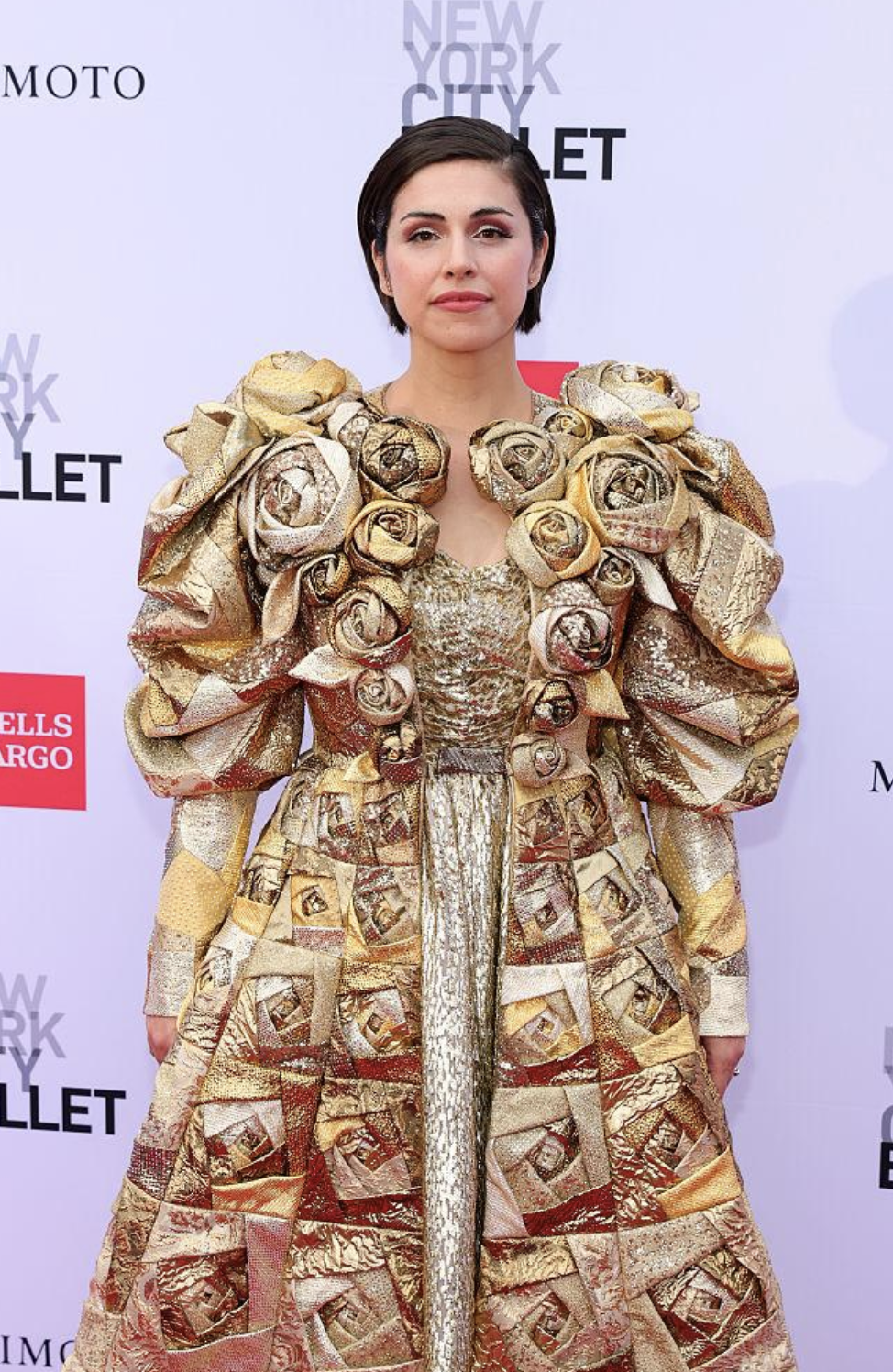
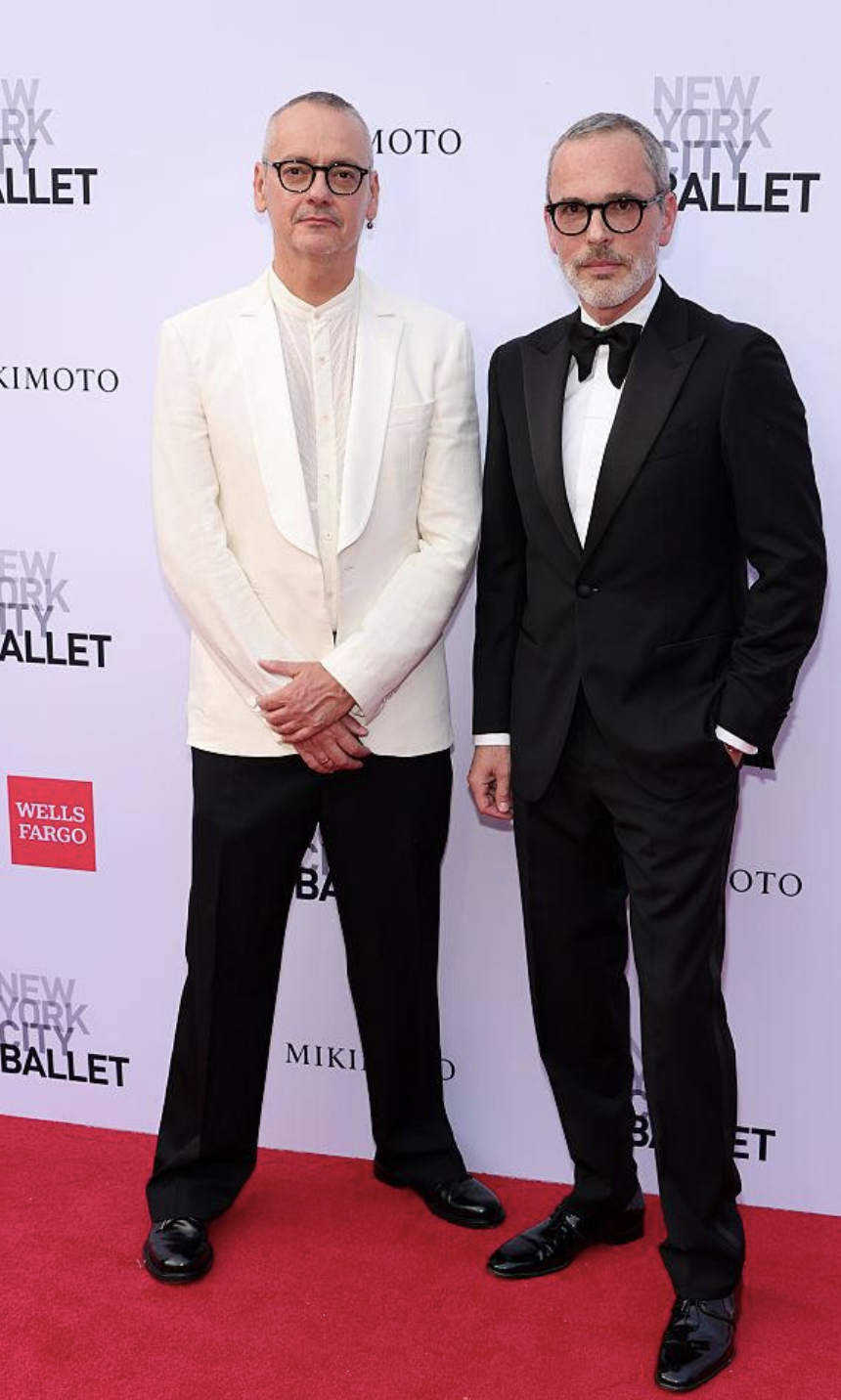
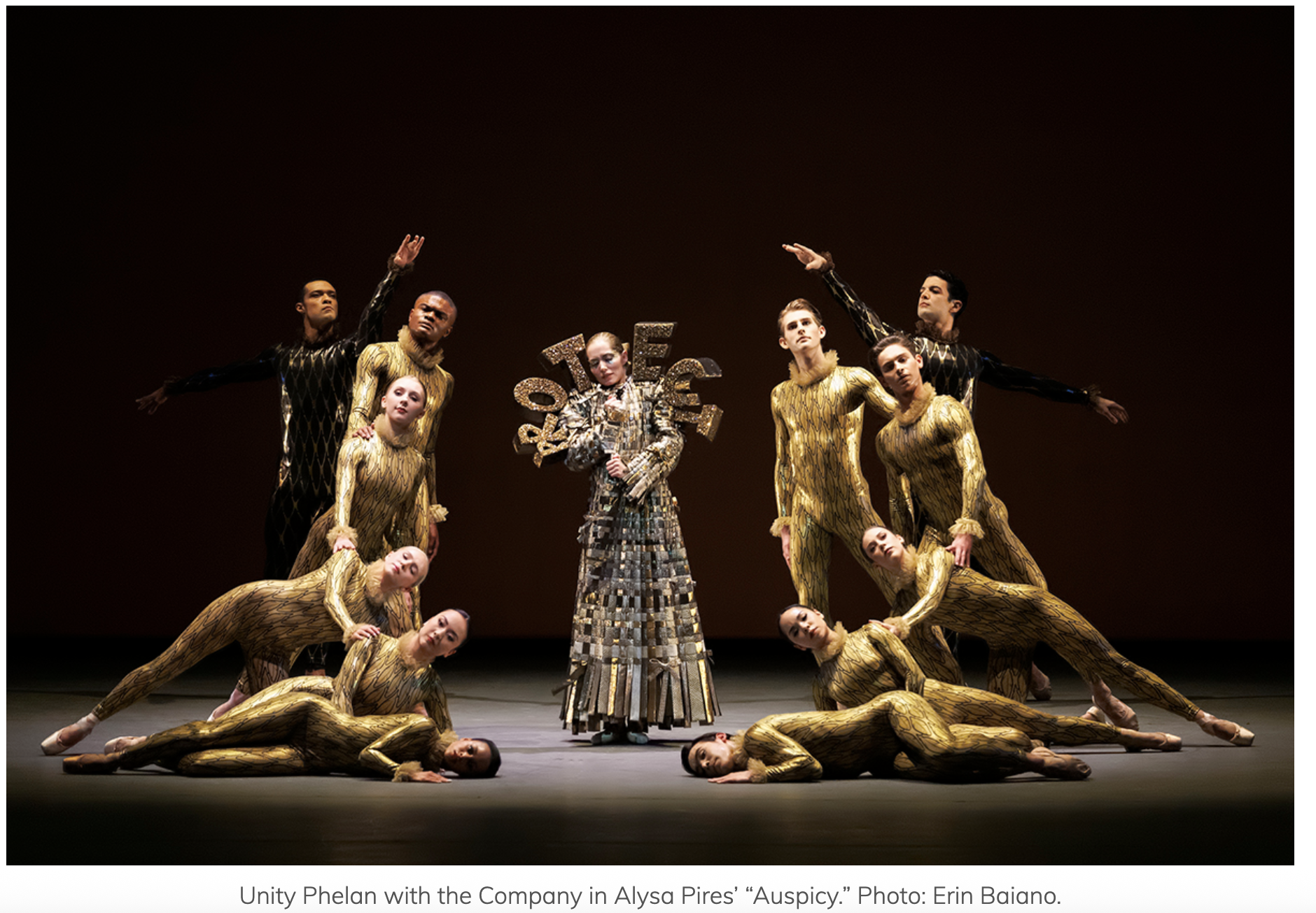
An aesthetic mismatch can critically compromise a work. This was precisely the case for Alysa Pires, paired with Viktor&Rolf for her ballet Auspicy, in which the costumery failed to serve the dance. Signs of incongruence were imminent from the divergent positions presented by the collaborators in the promotional video that opened the evening. Pires shared her concept: “the profound challenges, quiet reverence, and realities of motherhood during a turbulent time,” set to two pieces by Jocelyn Morlock: Oiseaux Bleus et Sauvages and Aeromancy: II. The designers introduced themselves as storytellers who take references literally, citing their latest runway collection of gold and burlap while asserting an "overlap" between her story and theirs.
There was not.
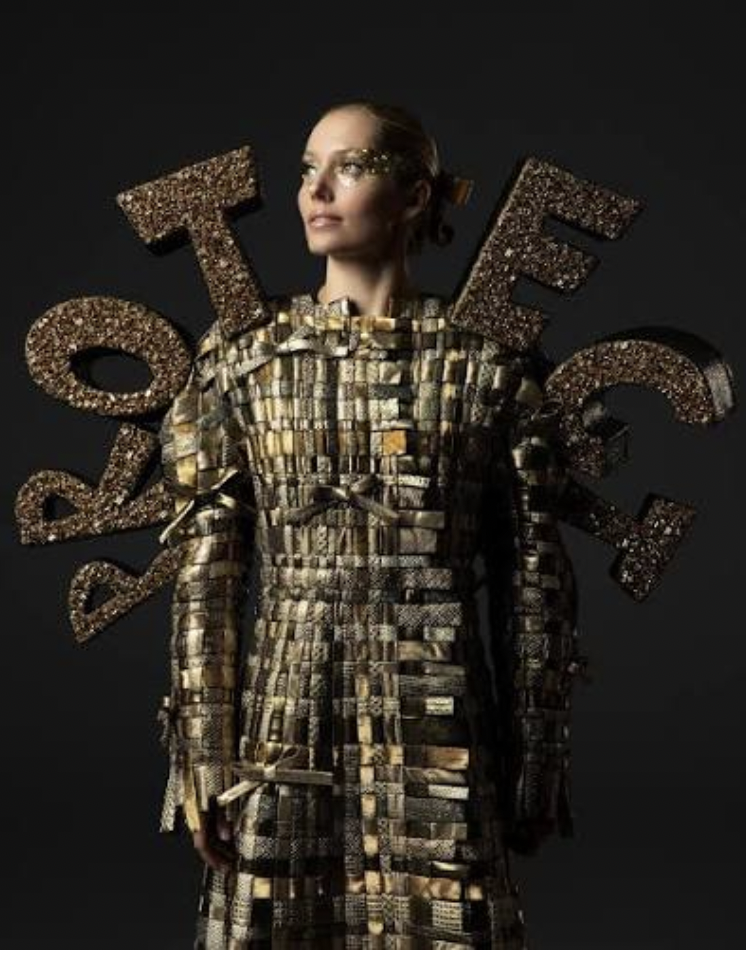
The curtain rose on a massive gold gown (a replica from their Fall 2026 collection) from which the dancers emerged clad in gold-patterned unitards with ruffled collars—a birthing of sorts, I suppose. Eventually, "The Mother," danced by Unity Phelan, appeared wearing another replica coat from their runway show, complete with the word "PROTECT" protruding in block letters from shoulder to shoulder.
What are we doing here?
It felt indulgent and, quite frankly, lazy on the part of the design house. Little thought, creativity, or energy was spent on the actual costume design for the 14 dancers representing the Offspring, Community, and Fledglings—garments that could have helped the audience decipher their roles. A gold-patterned unitard with a ruffle is basic, even if the designers found a convenient placement for their "Decadence" statement coat by swapping the text to "PROTECT." To add insult to injury, they placed Pires herself in another runway look for her curtain call. The result was a complete moment-robbery: a craftily executed decentering of the choreographer, the choreography, and the artistic vision. It was less an artistic synthesis than an elaborate piece of marketing for the brand. Partnerships work best when everyone understands the hierarchy and plays their position accordingly: costumes are always in service to the performance; they are not the performance itself. I was mad for her.
To Thine Own Self Be True
There are a few elements that make a work successful on this program. Beyond cohesion between partners, what can be thrilling is seeing City Ballet dancers look completely unrecognizable. Abraham’s The Runaway possessed the trifecta for success: the costumes were stunning, the music was edgy (including tracks by Kanye West), and the dancers—known for their punchy, Balanchinian lightning speed—executed his signature movement vernacular (a seamless amalgam of contemporary, hip-hop, ballet, and attitude) to blow the roof off the David H. Koch Theater, taking the Africanist Aesthetic to a new level on that stage.
Choreographers fail when they let the gravitas of NYCB’s legacy get in their heads and move away from their own identity, trying to create a work that looks like what they think should be on NYCB. In doing so, they miss the point. Stafford notes: “In the past, before I was in this role, sometimes the fashion gala ballets would look very much the same. The choreographers were too similar in their style, and then you just pair them with a fashion designer, and you see a lot of fashion, but a lot of the same output on the stage in terms of the way the dancers are moving. The gala needs to have an element of fun, risk-taking, and a bold, dynamic energy.”
This is what placed Archibald on their radar. Hers is contemporary ballet with punch and gravitas, often delivered through percussive unison gestural work. As a Black woman working in ballet, people often fixate on her use of hip-hop, but seldom talk about her position as Lecturer in Acting at the David Geffen School of Drama at Yale (which she has held for nearly a decade) or that she has been Cincinnati Ballet’s Resident Choreographer (the first Black female resident choreographer in major U.S. ballet history) for just as long. She is pedigreed—think Tharp, Pite, McGregor, Khan.
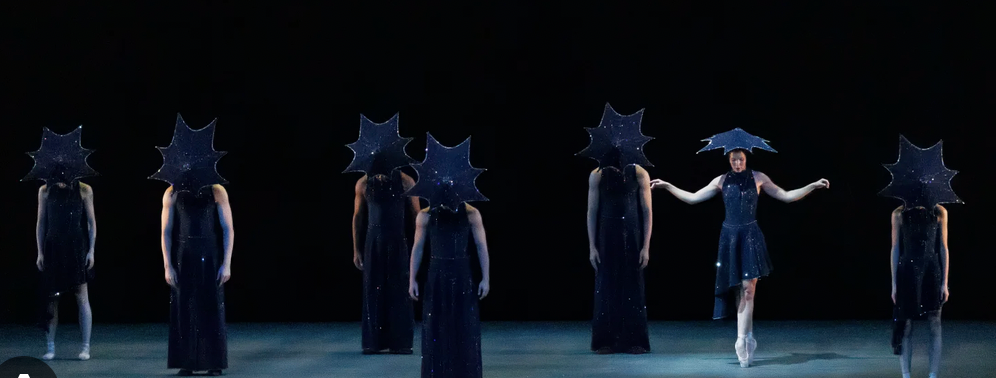
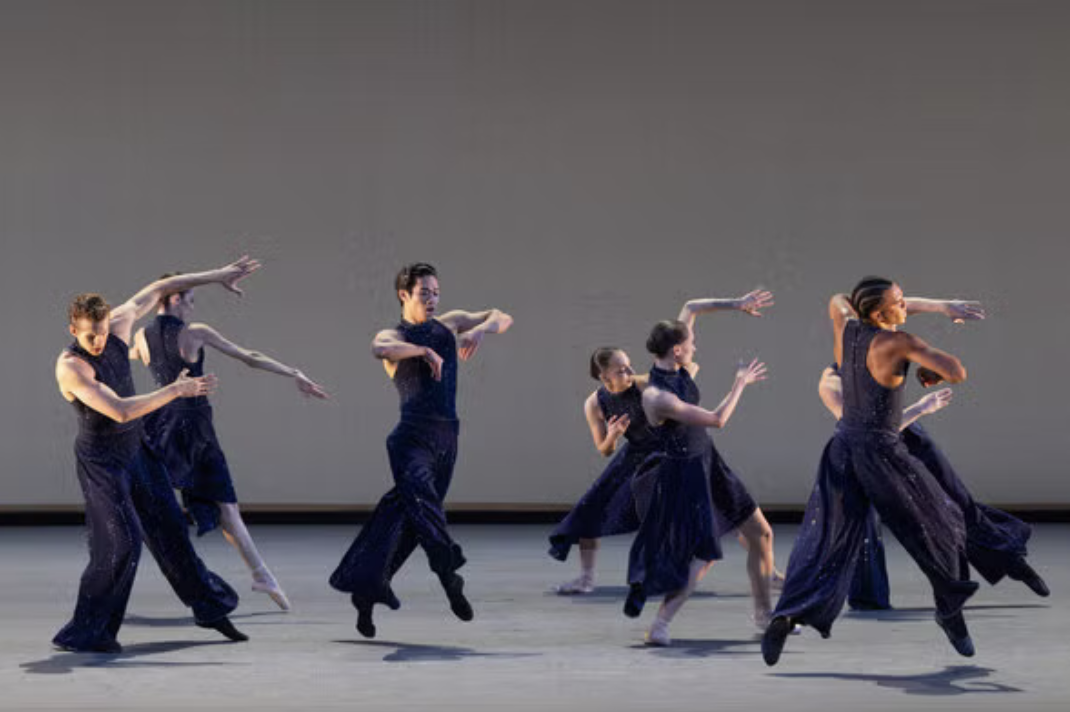
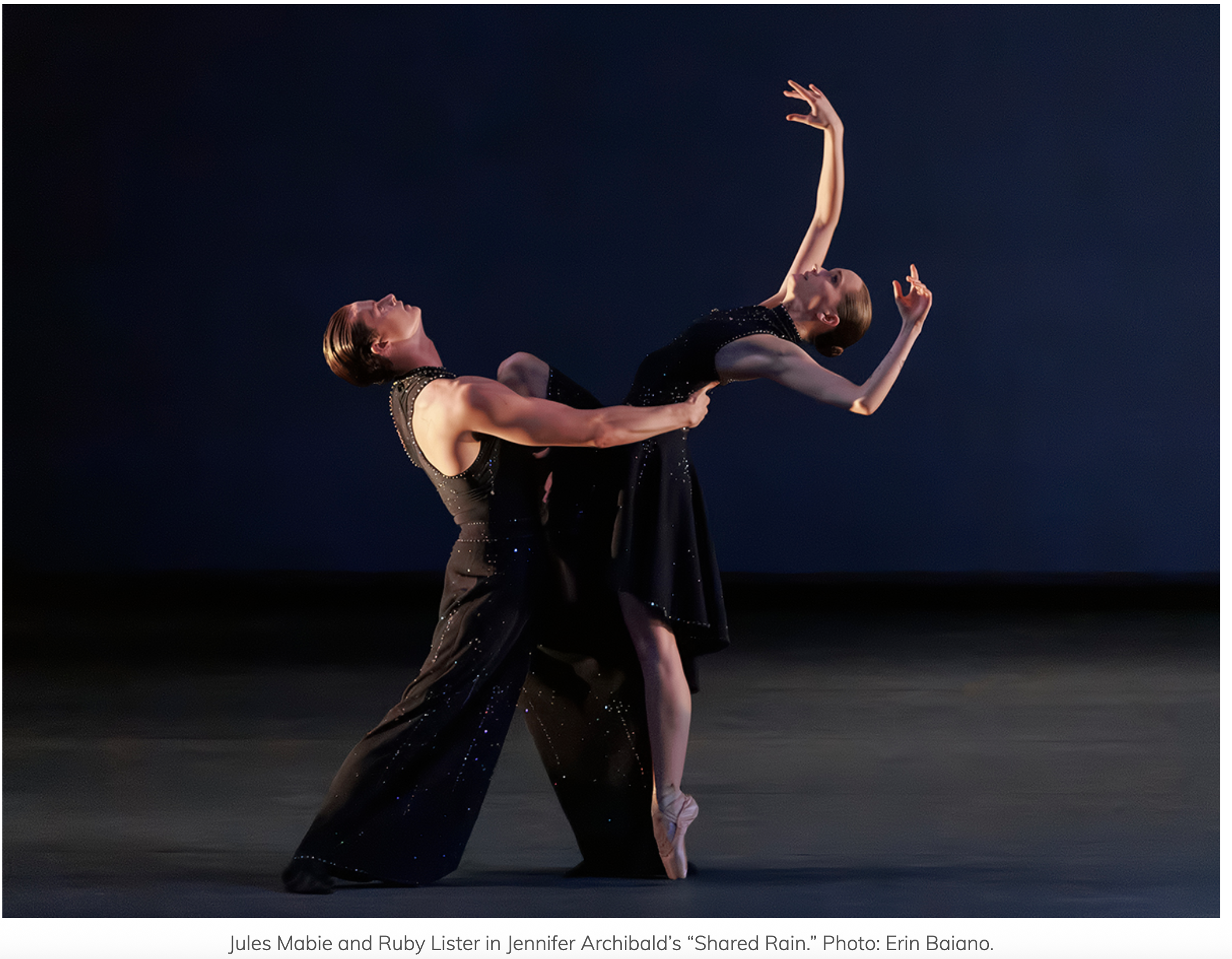
Paired with designer Robert Wun, Shared Rain fared much better as a collaboration than others on the program, though it was not without down-to-the-wire negotiations around final touches. “The designer wanted to see a few different options, and she had a really clear idea of what she thought worked best...” Stafford and Whelan supported Archibald in articulating her aesthetic reasoning from a dance perspective to reach a resolution. “They know at the end of the day—the fashion designers always know at the end of the day—that the choreography and the dance come first.”
It was for the best. When the curtain rose, the dancers were clad in midnight-blue dresses and trousers accented with sprays of Swarovski crystals, heads bowed, faces obscured by asymmetrical, bejeweled umbrellas. It made an immediate visual impact, bolstered by percussive gestural phrasing set to staccato breath sounds. The work stayed true to her authentic voice and style—which made the dancers stretch in style and approach. When the piece ended, the house erupted. Audience response is key—it is one of the primary measures of whether a work returns, alongside its potential for growth. “We're looking for a piece that we feel is artistically important. If Wendy and I feel like we need to see more of this piece, we want to see it mature [on the dancers],” shares Stafford. “And when we keep a piece within our rep, it’s because we don't have another piece like it in our rep.” Another sure-fire invitation to return is if the dancers and staff genuinely enjoy working with the maker.
The Pipeline: Racial and Idiom Divides
-
White Choreographers: 14 of 21 (67%)
-
57% (8 of 14) hail directly from traditional classical/neoclassical ballet pipelines (SAB/NYCB, Royal Ballet, Paris Opera Ballet, Royal Danish Ballet, National Ballet of Canada).
-
-
BIPOC Choreographers: 7 of 21 (33%)
-
Black Choreographers (0 of 4, 0%) hail from traditional classical ballet pipelines.
-
Asian / Latine Choreographers (1 of 3, 33%) hail from traditional classical ballet pipelines.
-
Note: Former NYCB dancers represent the vast majority of the classical pipeline cohort—accounting for 7 of the 9 total classical pipeline choreographers (78%): Liang, Lovette, Martins, Millepied, Peck, Schumacher, and Walker.
It is important to acknowledge that current leadership has cracked open the gate for choreographers of color—which is progress, and a start to be sure. However, to date, there have been no Black choreographers whose first language is ballet commissioned for the Fall Fashion Gala (and looking across their mainstage, Silas Farley’s 2022 Stravinsky Festival piece remains the lone exception).
This is an important detail that should be examined and addressed, as it matters greatly. It has to do with pedigree, which is the fuel that ballet runs on. Pedigree dictates the level of respect, access, and consideration one receives, specifically when it comes to larger platforms and leadership roles. It matters because it dictates where these works are positioned in the repertory and how they are programmed—frequently relegated to mixed-rep contemporary crossover slots that maintain a structural divide between guest contemporary makers and the core classical canon. I fear the eventual "ghettoization" of Black voices in ballet reps. They become convenient tools to create relevance or edge. As a sub-category, these works will never be lauded for mastery, sophistication, and genius through the same lens used for classical works.
It matters because although we will have a number of Black choreographers working in the highest echelon of ballet, they will most likely never be commissioned to choreograph a full-length story ballet—which, although antiquated, remains central to the identity of classical ballet. It matters because without Black makers who can trade tendu for tendu beside canonical ballet choreographers, it leaves room for the tacit, comfortable excuse that we simply are not talented or skilled enough.
And just like that, I realized that maybe we had it wrong all along. Maybe the glitter of the sequins and crystals made us believe that the New York City Ballet Fall Fashion Gala was all frivolity and mirth. Maybe we underestimated its substance—because statistically, it has strong artistic underpinnings that have produced tangible, translatable opportunities for choreographers over the years.
Perhaps, if we viewed it less like an ordinary evening at the ballet and more as a dynamic, game-changing challenge on a reality competition show, we could appreciate the offerings more. A high-stakes pressure cooker where artists are paired to create under unfathomable conditions—power struggles, personality clashes, impossible schedules, changing casts, injuries, and fragile egos—and yet, through it all, the works get to the stage (some dazzle; others look, as Project Runway's Tim Gunn would say, "overworked"). Then we might be able to sit back and enjoy, not judge.
The truth is, of the hundreds of ballets that get made every year, few are masterful. The majority of them are decent, others forgettable—these are just better dressed. Either way, the choreographers who are afforded this gilded stage gain currency that can be spent anywhere.