

2025 Dance Magazine Awards Swaps the Big Apple for Tinsel Town/ Donald Byrd Presentation and Acceptance
By Theresa Ruth Howard
Since its inception in 1954, the Dance Magazine Awards have traditionally been held in New York City. This year, the awards traded the Big Apple for tinsel, as the ceremony took place at the Debbie Allen Dance Academy in Los Angeles, California. Perhaps the change of coasts has something to do with the fact that DanceMedia Group, the publisher of Dance Magazine, Dance Spirit, Pointe, Dance Teacher, and The Dance Edit, merged with Hollywood.com in 2023. To be quite frank, it feels long overdue. Since its founding, Dance Magazine has been based in New York and has always leaned toward East Coast concert dance. With the hierarchy of dance being what it is, Los Angeles is the mecca of commercial, film, and television dance—but only recently has coverage of this world become more robust. Not only was the change of pace, place, and people refreshing, but it also felt like a step toward beginning to balance the scales.
When Donald Byrd asked me to present him with his Dance Magazine Award in 2025, I immediately accepted, fully expecting it to be held in “The City.” Upon hearing that the ceremony would be in LA, unfamiliar territory to me, I became immediately intrigued about the casting for the event.
When held in New York, the awards can feel cliquish and slightly incestuous—a who’s who of the usual suspects of the NYC dance scene, orbiting one another in the lobbies of the city’s many theaters that present dance. Attendees are typically presenters, directors, performers, and dance educators, primarily from the traditional concert dance world (ballet, modern, contemporary, downtown), with light representation from the musical theater and commercial spheres. Attendance tends to reflect the awardee being honored; people generally come out for one of their own, particularly in terms of race and ethnicity. Likewise, most outliers tend to be connected to an awardee.
The demographic leans toward the mature, mostly established industry types with direct connections to the respective awardees. The ticket prices almost guarantee that remains the case—this year, tickets ranged from $95 to $250, which is ironic, given that most people would not purchase a print copy of the magazine if it were available on a newsstand.
Those who attend the awards are part of, invested in, and raised on the old-school paradigm of hierarchy. That said, the opacity around the nomination process and the randomness of who is awarded always leaves an acrid aftertaste on the tongues of the field—and with good reason. The critique is not meant to diminish those who have been awarded, but rather to shine a spotlight on those who have been passed over.
In 2020, I was invited to join the Dance Magazine Awards committee by then editor-in-chief Jennifer Stahl. Although I could have been seen as qualified (I would soon learn that they were not sticklers for criteria), I had been a contributing writer for over 20 years and, over the last five, had been one of the preeminent voices in the conversation about racial and cultural work taking place in the ballet world. I would have been flattered—if we were not in the midst of the COVID crisis and the Black Lives Matter movement, when the world was on fire and historically white legacy institutions were looking for quick, surefire ways to project that they were on the “right side of history,” or clamoring to hop the fence. This was a time when having a Black woman on your team—staff, faculty, or board—was like a COVID immunization card: not only granting access but symbolizing a belief system.
Although I knew the invitation was layered—coming from Jenny, who had been my editor and had given me the space, platform, and trust to write what I believe were important pieces, pieces that were more radical than anything the magazine had published before—and because, like many people of color, I could not pass on an opportunity that would put me directly in a position to observe—and potentially influence—how recognition in the field was being awarded. I would be in the room where it happened, I accepted.
While I will not disclose the inner workings of the committee here (that is a different missive for another day—I left the committee when Hollywood.com required us to sign an NDA, which I refused), I will share how I approached the process upon entering it. Before our first meeting, we were asked to review the list of previous awardees and suggest additional nominees. After scouring the list, I noted that of the 245 awards given, roughly 30 were to non-white recipients. Being sensitive to the complexity of racial identity, the ways the world perceives one, and how one self-identifies, in 2019 the unverified breakdown roughly looked like this: 18 Black, 9 Latinx, 3 Asian, 2 Indigenous. I was not incredulous, but I understood the assignment.
Dance Magazine Awardees
When I submitted my 11 names—all from the African Diaspora—Jenny herself was shocked, thinking that some on my list had already been awarded. I assured her that I had gone over the list carefully and they had not. It was then that I took a bold stand, as a newcomer on the committee: that every awardee that year should be Black. We were in the midst of a racial reckoning, and of over 200 awards, only 18 had been given to Black artists—despite the profound impact and influence Blackness has on the field. Additionally, I suggested that posthumous awards be given to Black ballet dancers who had been overlooked pioneers, only to be told that posthumous awards are not given. You cannot right the wrongs of the past, but you can acknowledge them in the present.
I asked hard questions: What is the criteria for this award? I genuinely needed to understand how they had been arriving at these results—not to diminish the deserving awardees, but to understand why some had not been considered over decades of rich, impactful, and enduring careers. I was told that awardees were chosen based on their impact on the field. The next question was: How is the committee defining impact, on whom, and how?
That year, I was successful: all the awardees were Black, which felt apropos given the state of the world and, more specifically, the United States. Since then, a number of the names I had submitted have been awarded, including Brenda Dixon Gottschilds, Diane McIntyre, Camille A. Brown, Carlos Acosta, and this year, Donald Byrd.
In 2023, when Hollywood.com asked committee members to sign an NDA—as if we were working for the Pentagon—I declined and stepped down. I could not, in good conscience, sign my voice away. It was a difficult decision, but one I had to make on principle. Additionally, without going into too much detail about the process, that space required an emotional labor that was painful, depleting, and damaging to me personally. The adage “It’s a Black thing; you wouldn’t understand” fits well here—if you know, you know.
When I looked at the diversity of the awardees, and learned that posthumous awards were now being given, I was glad to know that some of what I brought to the table had a lasting impact. The change of venue brought a change of energy. The disposition of this year’s awards was as warm as the Los Angeles winter temperatures. Their vibration was that of the hardworking student who is constantly overlooked, finally being asked to take center stage. The Debbie Allen Dance Academy is a stunning space, adorned with history and Blackness, carrying the regalness and prestige of the Alvin Ailey “glass palace,” as Ms. Jamison would call it. The house—the legacy that “Debbie” built—is fashioned from the pure love of dance and children, and the power that the form bestows. It was beautiful to see how she and Lula Washington are both resected, revered, and loved within the East Coast community. Although we on the West Coast hold them in high regard, we do not often get to actively participate in this recognition. I enjoyed being a sideline observer, witnessing this side of the dance ecosystem in motion.
The attendees were, interestingly enough, a cross-section of the commercial dance world, dance educators (higher education and dance programs), with a smattering of theater folk and presenters. The vibe was excited but not anxious—authentically celebratory, as it should be when some of the legends of the industry are being honored. People were genuinely pleased to make whatever commute was necessary to celebrate the evening’s awardees, including:
• Director, producer, choreographer, and concert creator Kenny Ortega
• San Francisco Ballet Principal Frances Chung
• Harkness Promise Awardees: Annie Rigney & Micaela Taylor
• Choreographer, Founder, and Artistic Director of the Lula Washington Dance Theatre: Lula Washington
• Choreographer and Artistic Director of Spectrum Dance Theater: Donald Byrd
• ODC leaders Brenda Way and Kimi Okada
• Choreographer Mandy Moore
• Chairman Awardee: Debbie Allen

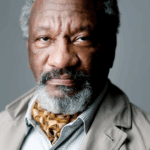


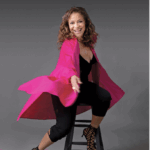
It was wonderful to hear the presenters talk about their awardees—to learn about their artistry, impact, and contributions—with laughter and reverence. And to hear the appreciation and humility of the recipients was truly heartwarming. For most, these amounted to lifetime achievement awards, given the age median of the recipients. I was honored to witness what I hope will be the first of many of these ceremonies in Los Angeles. La La Land looks good on it.